ASSAY: A JOURNAL OF NONFICTION STUDIES
  • 12.2 (Spring 2026)
    • 12.2 Editor's Note
    • 12.2 Articles >
      • Lynn Z. Bloom, "Mapping the Surprising Territory of Old Age: ​A Conversation with Memoirists" (Assay 12.2)
      • Heather Lanier, "The Science of Awe and the Essay" (Assay 12.2)
      • David Lazar, "Queering the Essay" (Assay 12.2)
      • Christine Light, "The Lyric Calls: Writing and Reading Trauma Paratactically ​in a Hypotactic World" (Assay 12.2)
      • Keene Short, "Erin Dorney and an Ontology of Ambivalence" (Assay 12.2)
    • 12.2 Conversations >
      • G. Douglas Atkins, “The Course of Interpretive Discovery”: An Essay on the Essay, an Essay on Criticism" (Assay 12.2)
      • William Gruber, "On Allusiveness" (Assay 12.2)
      • Jill Kolongowski, Brooke Champagne, Nicole Graev Lipson, Amy Monticello, and Beth Ann Fennelly, “Anger Had Snatched Her Pencil While She Dreamt”: ​Rage as a Craft Tool" (Assay 12.2)
      • Max Rubin, "Bernard Cooper and the Essayistic Sentence" (Assay 12.2)
      • Zoë Stark, "Beginnings and Endings in Brian Doyle’s “Joyas Voladoras”" (Assay 12.2)
    • 12.2 Pedagogy >
      • Jill Christman, "Writing the Tooth—Or, How to Find Big Ideas in Tiny Things" (Assay 12.2)
  • Archives
    • Journal Index >
      • Author Index
      • Subject Index
    • 1.1 (Fall 2014) >
      • Editor's Note
      • 1.1 Articles >
        • Sarah Heston, "Critical Memoir: A Recovery From Codes" (1.1)
        • Andy Harper, "The Joke's On Me: The Role of Self-Deprecating Humor in Personal Narrative" (1.1)
        • Ned Stuckey-French, "Our Queer Little Hybrid Thing" (1.1)
        • Brian Nerney, "John McCarten’s ‘Irish Sketches’: ​The New Yorker’s ‘Other Ireland’ in the Early Years of the Troubles, 1968-1974" (1.1)
        • Wendy Fontaine, "Where Memory Fails, Writing Prevails: Using Fallacies of Memory to Create Effective Memoir" (1.1)
        • Scott Russell Morris, "The Idle Hours of Charles Doss, or ​The Essay As Freedom and Leisure" (1.1)
      • 1.1 Conversations >
        • Donald Morrill, "An Industrious Enchantment" (1.1)
        • Sonya Huber, "Amazon Constellations" (1.1)
        • Derek Hinckley, "Fun Home: Change and Tradition in Graphic Memoir" (1.1)
        • Interview with Melanie Hoffert
        • Interview with Kelly Daniels
      • 1.1 Pedagogy >
        • Robert Brooke, "Teaching: 'Rhetoric: The Essay'" (1.1)
        • Richard Louth, "In Brief: Autobiography and Life Writing" (1.1)
    • 1.2 (Spring 2015) >
      • 1.2 Articles >
        • Kelly Harwood, "Then and Now: A Study of Time Control in ​Scott Russell Sanders' 'Under the Influence'" (1.2)
        • Diana Wilson, "Laces in the Corset: Structures of Poetry and Prose that Bind the Lyric Essay" (1.2)
        • Randy Fertel, "A Taste For Chaos: Creative Nonfiction as Improvisation" (1.2)
        • Lynn Z. Bloom, "Why the Worst Trips are the Best: The Comic Travails of Geoffrey Wolff & Jonathan Franzen" (1.2)
        • Ingrid Sagor, "What Lies Beside Gold" (1.2)
        • Catherine K. Buni, "Ego, Trip: On Self-Construction—and Destruction—in Creative Nonfiction" (1.2)
      • 1.2 Conversations >
        • Doug Carlson, "Paul Gruchow and Brian Turner: Two Memoirs Go Cubistic" (1.2)
        • Patrick Madden, "Aliased Essayists" (1.2)
        • Beth Slattery, "Hello to All That" (1.2)
        • Interview with Michael Martone (1.2)
      • Spotlight >
        • Richard Louth, "The New Orleans Writing Marathon and the Writing World" (1.2)
        • Kelly Lock-McMillen, "Journey to the Center of a Writer's Block" (1.2)
        • Jeff Grinvalds, "Bringing It Back Home: The NOWM in My Classroom" (1.2)
        • Susan Martens, "Finding My Nonfiction Pedagogy Muse at the NOWM" (1.2)
      • 1.2 Pedagogy >
        • Steven Church, "The Blue Guide Project: Fresno" (1.2)
        • Stephanie Vanderslice, "From Wordstar to the Blogosphere and Beyond: ​A Digital Literacy and Teaching Narrative (Epiphany Included)" (1.2)
        • Jessica McCaughey, "That Snow Simply Didn’t Fall: How (and Why) to Frame the Personal Essay as a Critical Inquiry into Memory in the First-Year Writing Classroom" (1.2)
    • 2.1 (Fall 2015) >
      • Editor's Note2.1
      • 2.1 Articles >
        • Daniel Nester, "Straddling the Working Class Memoir" (2.1)
        • Sarah M. Wells, "The Memoir Inside the Essay Collection: ​Jo Ann Beard's Boys of My Youth" (2.1)
        • Chris Harding Thornton, "Ted Kooser's "Hands": On Amobae, Empathy, and Poetic Prose" (2.1)
        • Steven Harvey & Ana Maria Spagna, "The Essay in Parts" (2.1)
        • Megan Culhane Galbraith, "Animals as Aperture: How Three Essayists Use Animals to Convey Meaning and Emotion" (2.1)
      • 2.1 Conversations >
        • Barrie Jean Borich, "Deep Portrait: On the Atmosphere of Nonfiction Character" (2.1)
        • Tim Bascom, "As I See It: Art and the Personal Essay" (2.1)
        • Adrian Koesters, "Because I Said So: Language Creation in Memoir" (2.1)
        • Interview with Simmons Buntin (2.1)
        • Mike Puican, "Narrative Disruption in Memoir" (2.1)
      • 2.1 Pedagogy >
        • Bernice M. Olivas, "Politics of Identity in the Essay Tradition" (2.1)
        • Ioanna Opidee, "Essaying Tragedy" (2.1)
        • Crystal N. Fodrey, "Teaching CNF Writing to College Students: A Snapshot of CNF Pedagogical Scholarship" (2.1)
        • W. Scott Olsen, "Teaching Adventure, Exploration and Risk" (2.1)
        • Christian Exoo & Sydney Fallon, "Using CNF to Teach the Realities of Sexual Assault to ​First Responders: An Annotated Bibliography" (2.1)
    • Special Conference Issue
    • 2.2 (Spring 2016) >
      • 2.2 Articles >
        • Micah McCrary, "A Legacy of Whiteness: Reading and Teaching Eula Biss’s Notes from No Man’s Land" (2.2)
        • Marco Wilkinson, "Self-Speaking World" (2.2)
        • Miles Harvey, "We Are All Travel Writers, We Are All Blind" (2.2)
        • Ashley Anderson, "Playing with the Essay: Cognitive Pattern Play in Ander Monson and Susan Sontag" (2.2)
        • Lawrence Evan Dotson, "Persona in Progression: ​A Look at Creative Nonfiction Literature in Civil Rights and Rap" (2.2)
      • 2.2 Conversations >
        • Julie Platt, "What Our Work is For: ​The Perils and Possibilities of Arts-Based Research" (2.2)
        • William Bradley, "On the Pleasure of Hazlitt" (2.2)
        • Jie Liu, "​'Thirteen Canada Geese': On the Video Essay" (2.2)
        • Stacy Murison, "​Memoir as Sympathy: Our Desire to be Understood" (2.2)
      • 2.2 Pedagogy >
        • Stephanie Guedet, "​Feeling Human Again: Toward a Pedagogy of Radical Empathy" (2.2)
        • DeMisty Bellinger-Delfield, "Exhibiting Speculation in Nonfiction: Teaching 'What He Took'" (2.2)
        • Gail Folkins, "Straight from the Source: ​Primary Research and the Personality Profile" (2.2)
    • 3.1 (Fall 2016) >
      • 3.1 Articles >
        • Chelsey Clammer, "Discovering the (W)hole Story: On Fragments, Narrative, and Identity in the Embodied Essay" (3.1)
        • Sarah Einstein, "'The Self-ish Genre': Questions of Authorial Selfhood and Ethics in ​First Person Creative Nonfiction" (3.1)
        • Elizabeth Paul, "​Seeing in Embraces" (3.1)
        • Jennifer M. Dean, "Sentiment, Not Sentimentality" (3.1)
      • 3.1 Conversations >
        • Interview with Robert Atwan (3.1)
        • Jody Keisner, "'Did I Miss a Key Point?': ​A Study of Repetition in Joan Didion’s Blue Nights" (3.1)
        • Julija Sukys, "In Praise of Slim Volumes: Big Book, Big Evil" (3.1)
        • Lynn Z. Bloom, "​The Great American Potluck Party" (3.1)
        • Jenny Spinner, "​The Best American Essays Series as (Partial) Essay History" (3.1)
      • 3.1 Pedagogy >
        • Heath Diehl, "​The Photo Essay: The Search for Meaning" (3.1)
        • Sonya Huber, "​James Baldwin: Nonfiction of a Native Son" (3.1)
        • Christian Exoo, "Using CNF to Teach the Realities of ​Intimate Partner Violence to First Responders: An Annotated Bibliography" (3.1)
        • John Proctor, "Teachin’ BAE: A New Reclamation of Research and Critical Thought" (3.1)
        • Richard Gilbert, "Classics Lite: On Teaching the Shorter, Magazine Versions of James Baldwin's 'Notes of a Native Son' and ​Jonathan Lethem's 'The Beards'" (3.1)
        • Dawn Duncan & Micaela Gerhardt, "The Power of Words to Build Bridges of Empathy" (3.1)
    • 3.2 (Spring 2017) >
      • 3.2 Articles >
        • Jennifer Lang, "When Worlds Collide: ​Writers Exploring Their Personal Narrative in Context" (3.2)
        • Creighton Nicholas Brown, "Educational Archipelago: Alternative Knowledges and the Production of Docile Bodies in Jamaica Kincaid’s A Small Place and Marjane Satrapi’s The Complete Persepolis" (3.2)
        • Nicola Waldron, "Containing the Chaos: On Spiral Structure and the Creation of Ironic Distance in Memoir" (3.2)
        • Charles Green, "Remaking Relations: ​Reading Ta-Nehisi Coates Beyond James Baldwin" (3.2)
        • Joey Franklin, "Facts into Truths: Henry David Thoreau and the Role of Hard Facts in ​Creative Nonfiction" (3.2)
      • 3.2 Conversations >
        • Thomas Larson, "What I Am Not Yet, I Am" (3.2)
        • Amanda Ake, "Vulnerability and the Page: Chloe Caldwell’s I’ll Tell You In Person"​ (3.2)
        • "Interview with Gail Griffin" (3.2)
        • Alysia Sawchyn, "On Best American Essays 1989" (3.2)
      • 3.2 Pedagogy >
        • D. Shane Combs, "Go Craft Yourself: Conflict, Meaning, and Immediacies Through ​J. Cole’s “Let Nas Down” (3.2)
        • Michael Ranellone, "Brothers, Keepers, Students: John Edgar Wideman Inside and Outside of Prison" (3.2)
        • Emma Howes & Christian Smith, ""You have to listen very hard”: Contemplative Reading, Lectio Divina, and ​Social Justice in the Classroom" (3.2)
        • Megan Brown, "The Beautiful Struggle: ​Teaching the Productivity of Failure in CNF Courses" (3.2)
    • 4.1 (Fall 2017) >
      • Editor's Note
      • 4.1 Articles >
        • Jennifer Case, "Place Studies: Theory and Practice in Environmental Nonfiction"
        • Bob Cowser, Jr., "Soldiers, Home: Genre & the American Postwar Story from Hemingway to O'Brien & then Wolff"
        • Sam Chiarelli, "Audience as Participant: The Role of Personal Perspective in Contemporary Nature Writing"
        • Kate Dusto, "Reconstructing Blank Spots and Smudges: How Postmodern Moves Imitate Memory in Mary Karr's The Liars' Club"
        • Joanna Eleftheriou, "Is Genre Ever New? Theorizing the Lyric Essay in its Historical Context"
        • Harriet Hustis, ""The Only Survival, The Only Meaning": ​The Structural Integrity of Thornton Wilder's Bridge in John Hersey's Hiroshima"
      • 4.1 Conversations >
        • Taylor Brorby, "​On 'Dawn and Mary'"
        • Steven Harvey, "​From 'Leap'"
        • J. Drew Lanham, "​On 'Joyas Voladoras'"
        • Patrick Madden, "On 'His Last Game'"
        • Ana Maria Spagna, "On 'How We Wrestle is Who We Are'"
      • 4.1 Pedagogy >
        • Jacqueline Doyle, "Shuffling the Cards: ​I Think Back Through Judith Ortiz Cofer"
        • Amy E. Robillard, "Children Die No Matter How Hard We Try: What the Personal Essay Teaches Us About Reading"
    • 4.2 (Spring 2018) >
      • 4.2 Articles >
        • Megan Brown, "Testimonies, Investigations, and Meditations: ​Telling Tales of Violence in Memoir"
        • Corinna Cook, "Documentation and Myth: On Daniel Janke's How People Got Fire"
        • Michael W. Cox, "Privileging the Sentence: David Foster Wallace’s Writing Process for “The View from Mrs. Thompson’s”
        • Sarah Pape, "“Artistically Seeing”: Visual Art & the Gestures of Creative Nonfiction"
        • Annie Penfield, "Moving Towards What is Alive: ​The Power of the Sentence to Transform"
        • Keri Stevenson, "Partnership, Not Dominion: ​Resistance to Decay in the Falconry Memoir"
      • 4.2 Conversations >
        • Interview with Jericho Parms (4.2)
        • "Containing the Hidden Lives of Ordinary Things: A Conversation with Seven Authors"
        • Amy Monticello, "The New Greek Chorus: Collective Characters in Creative Nonfiction"
        • Stacy Murison, "David Foster Wallace's 'Ticket to the Fair'"
        • Emery Ross, "Toward a Craft of Disclosure: Risk, Shame, & Confession in the Harrowing Essay"
      • 4.2 Pedagogy >
        • Sonya Huber, "Field Notes for a Vulnerable & Immersed Narrator" (4.2)
        • W. Scott Olsen, "In Other Words" (4.2)
    • 5.1 (Fall 2018) >
      • 5.1 Articles >
        • Emily W. Blacker, "Ending the Endless: The Art of Ending Personal Essays" (5.1)
        • Marya Hornbacher, ""The World is Not Vague": Nonfiction and the Urgency of Fact" (5.1)
        • Rachel May, "The Pen and the Needle: ​ Intersections of Text and Textile in and as Nonfiction" (5.1)
        • Jen Soriano, "Multiplicity from the Margins: The Expansive Truth of Intersectional Form" (5.1)
      • 5.1 Conversations >
        • Matthew Ferrence, "In Praise of In Praise of Shadows: Toward a Structure of Reverse Momentum" (5.1)
        • John Proctor, "Nothing Out of Something: Diagramming Sentences of Oppression" (5.1)
        • Alysia Sawchyn, "Essaying the World: ​On Tell Me How It Ends: An Essay in Forty Questions" (5.1)
        • Nicole Walker, "On Beauty" (5.1)
      • 5.1 Spotlight >
        • Philip Graham, "The Shadow Knows (5.1)
        • Miles Harvey, "The Two Inmates: ​Research in Creative Nonfiction and the Power of “Outer Feeling”" (5.1)
        • Tim Hillegonds, "Making Fresh" (5.1)
        • Michele Morano, "Creating Meaning Through Structure" (5.1)
      • 5.1 Pedagogy >
        • Meghan Buckley, "[Creative] Nonfiction Novella: Teaching Postcolonial Life Writing and the ​Hybrid Genre of Jamaica Kincaid’s A Small Place" (5.1)
        • Edvige Giunta, "Memoir as Cross-Cultural Practice in Italian American Studies" (5.1) >
          • Vivian Wagner, "Crafting Digression: Interactivity and Gamification in Creative Nonfiction" (5.1)
        • Jody Keisner, "Gender Identity in Personal Writing: Contextualizing the Syllabi" (5.1)
        • Terry Ann Thaxton, "Workshop Wild" (5.1)
        • Amanda Wray, "​Contesting Traditions: Oral History in Creative Writing Pedagogy" (5.1)
    • 5.2 (Spring 2019) >
      • 5.2 Articles >
        • Nina Boutsikaris, "On Very Short Books, Miniatures, and Other Becomings" (5.2)
        • Kay Sohini, "The Graphic Memoir as a Transitional Object: ​ Narrativizing the Self in Alison Bechdel’s Are You My Mother?" (5.2)
        • Kelly Weber, ""We are the Poem": Structural Fissures and Levels in ​Lidia Yuknavitch’s The Chronology of Water" (5.2)
      • 5.2 Conversations >
        • Sam Cha, "​Unbearable Splendor: Against "Hybrid" Genre; Against Genre" (5.2)
        • Rachel Cochran, "Infection in “The Hour of Freedom”: Containment and Contamination in Philip Kennicott’s “Smuggler”" (5.2)
        • Katharine Coles, "​If a Body" (5.2)
        • A.M. Larks, "Still Playing the Girl" (5.2)
      • 5.2 Spotlight >
        • Charles Green, "In Praise of Navel Gazing: An Ars Umbilica" (5.2)
        • Sarah Kruse, "​The Essay: Landscape, Failure, and Ordinary’s Other" (5.2)
        • Desirae Matherly, "Something More Than This" (5.2)
        • Susan Olding, "Unruly Pupil" (5.2)
        • Jane Silcott, "Essaying Vanity" (5.2)
      • 5.2 Tribute to Louise DeSalvo >
        • Julija Sukys, "One Mother to Another: Remembering Louise DeSalvo (1942—2018)" (5.2)
        • Nancy Caronia and Edvige Giunta, "The Essential Louise DeSalvo Reading List" (5.2)
        • Nancy Caronia and Edvige Giunta, "From the Personal Edge: Beginning to Remember Louise DeSalvo" (5.2)
        • Richard Hoffman, "DeSalvo Tribute, IAM Books, Boston" (5.2)
        • Peter Covino, "Getting It Right – Homage for Louise DeSalvo" (5.2)
        • Mary Jo Bona, "Pedagogy of the Liberated and Louise DeSalvo’s Gifts" (5.2)
        • Joshua Fausty, "The Shared Richness of Life Itself" (5.2)
      • 5.2 Pedagogy >
        • Ashley Anderson, "Teaching Experimental Structures through Objects and ​John McPhee’s 'The Search for Marvin Gardens'" (5.2)
        • Trisha Brady, "Negotiating Linguistic Borderlands, Valuing Linguistic Diversity, and Incorporating Border Pedagogy in a College Composition Classroom" (5.2)
        • Kim Hensley Owens, "Writing Health and Disability: Two Problem-Based Composition Assignments" (5.2)
        • Reshmi Mukherjee, "Threads: From the Refugee Crisis: Creative Nonfiction and Critical Pedagogy" (5.2)
        • Susan M. Stabile, "Architectures of Revision" (5.2)
    • 6.1 (Fall 2019) >
      • 6.1 Articles >
        • Lynn Z. Bloom, "The Slippery Slope: ​Ideals and Ethical Issues in High Altitude Climbing Narratives" (6.1)
        • Tanya Bomsta, "The Performance of Epistemic Agency of the ​Autobiographical Subject in Terry Tempest Williams’s When Women Were Birds: Fifty-four Variations on Voice" (6.1)
        • Lorna Hummel, "Querying and Queering Caregiving: Reading Bodies Othered by Illness via Porochista Khakpour’s Sick: A Memoir" (6.1)
        • Laura Valeri, "Tell Tale Interviews: Lessons in True-Life Trauma Narratives Gleaned from ​Jennifer Fox’s The Tale" (6.1)
        • Arianne Zwartjes​, "Under the Skin: An Exploration of Autotheory" (6.1)
      • 6.1 Conversations >
        • Tracy Floreani, "​"Sewing and Telling": On Textile as Story" (6.1)
        • Tessa Fontaine, "The Limits of Perception: Trust Techniques in Nonfiction" (6.1)
        • Patrick Madden, "​Once More to 'His Last Game'" (6.1) >
          • Brian Doyle, "Twice More to the Lake" (6.1)
        • Randon Billings Noble, "The Sitting" (6.1)
        • Donna Steiner, "Serving Size: On Hunger and Delight" (6.1)
        • Natalie Villacorta, "Autofiction: Rightly Shaped for Woman’s Use" (6.1)
      • 6.1 Tribute to Ned Stuckey-French >
        • Marcia Aldrich, "The Book Reviewer" (6.1)
        • Bob Cowser, "Meeting Bobby Kennedy" (6.1)
        • Sonya Huber, "Working and Trying" (6.1)
        • Carl H. Klaus, "On Ned Stuckey-French and Essayists on the Essay" (6.1)
        • Robert Root, "On The American Essay in the American Century" (6.1)
      • 6.1 Pedagogy >
        • John Currie, "​The Naïve Narrator in Student-Authored Environmental Writing" (6.1)
        • Steven Harvey, "The Humble Essayist's Paragraph of the Week: A Discipline of the Heart and Mind" (6.1)
        • Reagan Nail Henderson, "Make Me Care!: Creating Digital Narratives in the Composition Classroom" (6.1)
        • Abriana Jetté, "Making Meaning: Authority, Authorship, and the Introduction to Creative Writing Syllabus" (6.1)
        • Jessie Male, "Teaching Lucy Grealy’s “Mirrorings” and the Importance of Disability Studies Pedagogy in Composition Classrooms" (6.1)
        • Wendy Ryden, "Liminally True: Creative Nonfiction as Transformative Thirdspace" (6.1)
    • 6.2 (Spring 2020) >
      • Guest Editor's Note to the Special Issue
      • 6.2 Articles >
        • Maral Aktokmakyan, "Revisioning Gendered Reality in ​Armenian Women’s Life Writing of the Post-Genocidal Era: Zaruhi Kalemkearian’s From the Path of My Life"
        • Manisha Basu, "Regimes of Reality: ​Of Contemporary Indian Nonfiction and its Free Men"
        • Stefanie El Madawi, "Telling Tales: Bearing Witness in Jennifer Fox’s The Tale"
        • Inna Sukhenko and Anastasia Ulanowicz, "Narrative, Nonfiction, and the Nuclear Other: Western Representations of Chernobyl in the Works of Adam Higginbotham, Serhii Plokhy, and Kate Brown"
      • 6.2 Conversations >
        • Leonora Anyango-Kivuva, "Daughter(s) of Rubanga: An Author, a Student, and Other Stories in Between"
        • Victoria Brown, "How We Write When We Write About Life: Caribbean Nonfiction Resisting the Voyeur"
        • David Griffith, "Wrecking the Disimagination Machine"
        • Stacey Waite, "Coming Out With the Truth"
      • Tribute to Michael Steinberg >
        • Jessica Handler, "Notes on Mike Steinberg"
        • Joe Mackall, "Remembering Mike Steinberg: On the Diamond and at the Desk"
        • Laura Julier, "Making Space"
      • 6.2 Pedagogy >
        • Jens Lloyd, "Truthful Inadequacies: Teaching the Rhetorical Spark of Bashō’s Travel Sketches"
        • George H. Jensen, "Situating Scenes: Cheryl Strayed’s “The Love of My Life”
        • Gregory Stephens, "Footnotes from the ‘Margins’: Outcomes-based Literary Nonfiction Pedagogy in Puerto Rico"
    • 7.1 (Fall 2020) >
      • 7.1 Articles >
        • Jo-Anne Berelowitz, "Mourning and Melancholia in Memoir" (Assay 7.1)
        • Carlos Cunha, "On the Chronicle" (Assay 7.1)
        • August Owens Grimm, "Haunted Memoir" (Assay 7.1)
        • Colleen Hennessy, "Irish Motherhood in Irish Nonfiction: Abortion and Agency" (Assay 7.1)
        • James Perrin Warren, "Underland: Reading with Robert Macfarlane" (Assay 7.1)
      • 7.1 Conversations >
        • Alex Brostoff, ""What are we going to do with our proximity, baby!?" ​ A Reply in Multiples of The Hundreds" (Assay 7.1)
        • Steven Harvey, "Lyric Memory: A Guide to the Mnemonics of Nonfiction" (Assay 7.1)
        • Lisa Low, "Proleptic Strategies in Race-Based Essays: Jordan K. Thomas, Rita Banerjee, and Durga Chew-Bose" (Assay 7.1)
        • Nicole Walker, "The Concrete Poetry of Ander Monson’s Essays" (Assay 7.1)
      • 7.1 Pedagogy >
        • Audrey T. Heffers, "Positionality and Experience in the Creative Nonfiction Classroom" (Assay 7.1)
        • James McAdams, "Ars Poetica, Ars Media, Ars COVID-19: Creative Writing in the Medical Classroom" (Assay 7.1)
        • Freesia McKee, "Feedback as Fan Letter" (Assay 7.1)
        • Tonee Mae Moll, "Teaching and Writing True Stories Through ​Feminist, Womanist and Black Feminist Epistemologies" (Assay 7.1)
        • Jill Stukenberg, "“Inspiration in the Drop of Ink”: Scholarship of Teaching and Learning Observations in Introduction to Creative Writing" (Assay 7.1)
    • 7.2 (Spring 2021) >
      • 7.2 Articles >
        • Whitney Brown, "Melting Ice and Disappointing Whale Hunts: A Climate-Focused Review of Contemporary Travel Writing" (Assay 7.2)
        • George Estreich, "Ross Gay’s Logics of Delight" (Assay 7.2)
        • Wes Jamison, "'You Are Absent': The Pronoun of Address in Nonfiction" (Assay 7.2)
        • Zachary Ostraff, "The Lyric Essay as a Form of Counterpoetics" (Assay 7.2)
        • Kara Zivin, "Interrogating Patterns: Meandering, Spiraling, and Exploding through ​The Two Kinds of Decay" (Assay 7.2)
      • 7.2 Conversations >
        • Sarah Minor
        • David Shields
      • 7.2 Pedagogy >
        • Megan Baxter, "On Teaching Brian Doyle’s “Leap” to Students Born After 9/11" (Assay 7.2)
        • Jennifer Case, "'Toward a New, Broader Perspective': Place-Based Pedagogy and the Narrative Interview"
        • Kelly K. Ferguson, "Cribbing Palpatine’s Syllabus: Or, What Professoring for the Evil Empire Taught Me ​About Instructional Design" (Assay 7.2)
        • Jennifer Pullen, "Seeking Joy in the Classroom: Nature Writing in 2020" (Assay 7.2)
    • 8.1 (Fall 2021) >
      • 8.1 Articles >
        • Allison Ellis, "Nonfiction Ghost Hunting" (Assay 8.1)
        • Lisa Levy, "We Are All Modern: Exploring the Vagaries of Consciousness in 20th & 21st Century Biography and Life Writing" (Assay 8.1)
        • Ashley Espinoza, "A las Mujeres: Hybrid Identities in Latina Memoir" (Assay 8.1)
        • Cherie Nelson, "The Slippery Self: Intertextuality in Lauren Slater’s Lying" (Assay 8.1)
        • Amie Souza Reilly, "Reading the Gaps: On Women’s Nonfiction and Page Space" (Assay 8.1)
      • 8.1 Conversations >
        • Amy Bowers, "The Elegiac Chalkboard in Jo Ann Beard’s “The Fourth State of Matter”" (Assay 8.1)
        • Theresa Goenner, "​The Mania of Language: Robert Vivian's Dervish Essay" (Assay 8.1)
        • Kathryn Nuernberger, "Writing Women’s Histories" (Assay 8.1)
        • Louisa McCullough, "The Case for In-Person Conversation" (Assay 8.1)
        • Kat Moore, "Rupture in Time (and Language): Hybridity in Kathy Acker’s Essays" (Assay 8.1)
      • 8.1 Pedagogy >
        • Mike Catron, "There’s No Such Thing as Too Much of Jason Sheehan’s “There’s No Such Thing As Too Much Barbecue”: ​A Pedagogical Discussion" (Assay 8.1)
        • Brooke Covington, "Ars Media: A Toolkit for Narrative Medicine in Writing Classrooms" (Assay 8.1)
        • W. Scott Olsen, "​A Desire for Stories" (Assay 8.1)
        • C.S. Weisenthal, "​Seed Stories: Pitched into the Digital Archive" (Assay 8.1)
    • 8.2 (Spring 2022) >
      • 8.2 Articles >
        • Barrie Jean Borich, "Radical Surprise: The Subversive Art of the Uncertain," (8.2)
        • George Estreich, "Feeling Seen: Blind Man’s Bluff, Memoir, and the Sighted Reader" (8.2)
        • Kristina Gaddy, "When Action is Too Much and Not Enough: A Study of Mode in Narrative Journalism" (8.2)
        • Marya Hornbacher, "Solitude Narratives: Towards a Future of the Form" (8.2)
        • Margot Kotler, "Susan Sontag, Lorraine Hansberry, and the ​Politics of Queer Biography " (8.2)
      • 8.2 Conversations >
        • Michael W. Cox , "On Two Published Versions of Joan Didion’s “Marrying Absurd” (8.2)
        • Hugh Martin, "No Cheap Realizations: On Kathryn Rhett’s “Confinements” (8.2)
      • 8.2 Pedagogy >
        • Liesel Hamilton, "How I Wish I’d Taught Frederick Douglass: An Examination of the Books and Conversations We Have in Classrooms" (8.2)
        • Audrey T. Heffers, "In the Room Where it Happens: Accessibility, Equity, and the Creative Writing Classroom" (8.2)
        • Daniel Nester, "Joan Didion and Aldous Huxley’s Three Poles" (8.2)
    • 9.1 (Fall 2022) >
      • 9.1 Articles >
        • Mark Houston, "Riding Out of Abstraction: Robin Wall Kimmerer’s Re-materialization of ​Social Justice Rhetoric in “The Sacred and the Superfund”" (9.1)
        • Ryan McIlvain, ""You Get to Decide What to Worship but Not What's Good": Rereading 'This Is Water'" (9.1)
        • Quincy Gray McMichael, "Laboring toward Leisure: The Characterization of Work in ​Maine’s Back-to-the-Land Memoirs" (9.1)
        • Aggie Stewart, "Bringing Dark Events to Light: ​Emotional Pacing in the Trauma Narrative" (9.1)
        • Emma Winsor Wood, "A Lovely Woman Tapers Off into a Fish: Monstrosity in Montaigne’s Essais" (9.1)
      • 9.1 Conversations >
        • Philip Newman Lawton, "Rousseau's Wandering Mind" (9.1)
        • Claire Salinda, "Bodily Dissociation as a Female Coping Mechanism in ​The Shapeless Unease, Ongoingness: The End of a Diary, and Girlhood" (9.1)
        • Hannah White, "“Which sounds bad and maybe was”: A Study of Narrative in Beth Nguyen’s “Apparent”" (9.1)
      • 9.1 Pedagogy >
        • Jessica Handler, "Your Turn" (9.1)
        • Sonya Huber, "Expressing Anger as a Positive Choice" (9.1)
        • Kozbi Simmons, "Literacy as Emancipation" (9.1)
        • Wally Suphap, "Writing and Teaching the Polemic" (9.1)
    • 9.2 (Spring 2023) >
      • 9.2 Articles >
        • Brinson Leigh Kresge, "Repetition Development in the Lyric Essay" (Assay 9.2)
        • Amy Mackin, "A Structural History of American Public Health Narratives: Rereading Priscilla Wald’s Contagious and Nancy Tomes’ Gospel of Germs amidst a 21st-Century Pandemic" (Assay 9.2)
        • Jeannine Ouellette, "That Little Voice: The Outsized Power of a Child Narrator" (Assay 9.2)
        • Jennifer Lee Tsai, "The Figure of the Diseuse in Theresa Hak Kyung Cha's Dictee: Language, Breaking Silences and Irigarayan Mysticism" (Assay 9.2)
      • 9.2 Conversations >
        • Blossom D'Souza, "The Imagery of Nature in Rilke’s Letters to a Young Poet" (Assay 9.2)
        • Kyra Lisse, "Relentlist Women: On the Lists & Catalogs of Natalia Ginzburg & Annie Ernaux" (Assay 9.2)
        • William Kerwin,​ “Life as a Boneyard”: Art, History, and Ecology in One Tim Robinson Essay" (Assay 9.2)
        • Jill Kolongowski & Amy Monticello, "The Mundane as Maximalism of the Mind: Reclaiming the Quotidian" (Assay 9.2)
        • Eamonn Wall, "A Land Without Shortcuts: Tim Robinson and Máiréad Robinson" (Assay 9.2)
      • 9.2 Pedagogy >
        • Khem Aryal, "Beyond Lores: Linking Writers’ Self-Reports to Autoethnography" (Assay 9.2)
        • Jennifer Case, "Carework in the Creative Nonfiction Classroom: ​Toward a Trauma-Informed Pedagogy" (Assay 9.2)
        • Liesel Hamilton, "Creating Nonfiction Within and Against ​Nature and Climate Tropes" (Assay 9.2)
        • W. Scott Olsen, "Late Night Thoughts on What Street Photography ​Can Teach Us About Teaching Writing" (Assay 9.2)
    • 10.1 (Fall 2023) >
      • 10.1 Articles >
        • Ashley Anderson, "Give Them Space: ​Memoir as a Site for Processing Readers’ Grief" (Assay 10.1)
        • Anne Garwig, "Hervey Allen’s Toward the Flame, Illustration, and the ​Legacy of Collective Memory of the First World War" (Assay 10.1)
        • Marya Hornbacher, "All We Do Not Say: The Art of Leaving Out" (Assay 10.1)
        • Kathryn Jones, "Conveying the Grief Experience: Joan Didion’s Use of Lists in The Year of Magical Thinking and Blue Nights" (Assay 10.1)
        • Erin Fogarty Owen, "How to Write Well About Death" (Assay 10.1)
      • 10.1 Conversations >
        • Beth Kephart, "On Reading Fast and Reading Slow" (Assay 10.1)
        • Mimi Schwartz, "The Power of Other Voices in Creative Nonfiction" (Assay 10.1)
      • 10.1 Pedagogy >
        • Angie Chuang, "Dear(ly) Departed: ​Letter-Writing to Engage the Issue of Racialized Police Brutality" (Assay 10.1)
        • Freesia McKee, "Where and How We Might Teach Hybrid: A Pedagogical Review of Kazim Ali’s Silver Road" (Assay 10.1)
    • 10.2 (Spring 2024) >
      • 10.2 Articles >
        • Lynn Z. Bloom, "Vanishing Points: Memoirs of Loss and Renewal "(Assay 10.2)
        • Lindsey Pharr, "Brave Person Drag": ​Identity, Consciousness, and the Power of the Cyclical in Gamebook-Formatted Memoir" (Assay 10.2)
      • 10.2 Conversations >
        • Marcia Aldrich, "On Difficulty" (Assay 10.2)
        • Thomas Larson, "Paraphrase, or Writer with Child" (Assay 10.2)
      • 10.2 Pedagogy >
        • Amy Bonnaffons, "Writing from the Big Brain: ​An Argument for Image and Process in Creative Writing Education" (Assay 10.2)
        • Micah McCrary, "Normalizing Creative Writing Scholarship in the Classroom" (Assay 10.2)
        • Candace Walsh, "The Braided Essay as Change Agent" (Assay 10.2)
    • 11.1 (Fall 2024) >
      • 11.1 Articles >
        • Anna Nguyen, "A Question on Genre: The Binary of the Creative/Theoretical Text in Elif Batuman’s The Possessed" (Assay 11.1)
        • Rachel N. Spear, "Saving Self and Others in Telling: Rhetoric, Stories, and Transformations" (Assay 11.1)
      • 11.1 Conversations >
        • Jehanne Dubrow, "The Essay's Volta" (Assay 11.1)
        • James Allen Hall, "Wholly Fragmented" (Assay 11.1)
      • 11.1 Spotlight >
        • Kim Hensley Owens & Yongzhi Miao, "Six Words is Enough: Memoirs for Assessment" (Assay 11.1)
        • Elizabeth Leahy, "Creating Space for Writing Tutor Vulnerability: Six-Word Memoirs in the Writing Center" (Assay 11.1)
        • Jennifer Stewart, "Six-Word Memoirs as Programmatic and Pedagogical Reflection" (Assay 11.1)
        • Katherine Fredlund, "Six Words Toward Knowing and Feeling" (Assay 11.1)
      • 11.1 Pedagogy >
        • Abby Manzella, "In Search of Delight (à la Ross Gay) at the Art Museum: ​A Writing Exercise with Pen in Hand" (Assay 11.1)
        • Peter Wayne Moe, "Grocery Shopping with Leonardo DiCaprio: On Time, Routines, & Writing" (Assay 11.1)
        • Gwen Niekamp, "The Case for Situating Olaudah Equiano’s Interesting Narrative ​in the CNF Classroom and Canon" (Assay 11.1)
    • 11.2 (Spring 2025) >
      • 11.2 Articles >
        • Megan Brown, “Quit Lit” as Neoliberal Narrative: The Nonfiction of Burnout, Self-Actualization, and the Great Resignation" (Assay 11.2)
        • Amy Cook, "Where There’s Smoke, There’s Blue Sky: The Hallmarks of 9/11’s Imagery in Prose" (Assay 11.2)
      • 11.2 Conversations >
        • Thomas Larson, "The Reader's Mental Ear" (Assay 11.2)
        • Patrick Madden, "An Open Letter to My Late Friend Brian Doyle" (Assay 11.2)
        • Rhonda Waterhouse, "Woven Craft: The Artistic Tools of Toni Jensen’s “Carry” (Assay 11.2)
      • 11.2 Pedagogy >
        • Becky Blake and Matthew J. Butler, "Avoiding Empathy Fatigue: What CNF Educators Can Learn from an Oncologist" (Assay 11.2)
        • Kelly Myers and Bruce Ballenger, "Essayism in the Age of AI" (Assay 11.2)
        • Marco Wilkinson, "Exquisite Copse" (Assay 11.2)
    • 12.1 (Fall 2025) >
      • 12.1 Editor's Note
      • 12.1 Articles >
        • Amy Bonnaffons, "Bodies of Text: On the Lyric Essay" (Assay 12.1)
        • Megan Connolly, "A Team in the Face of the World: Dogs as Narrative Agents in Memoirs about Life after Loss" (Assay 12.1)
        • Jeff Porter, "The History and Poetics of the Essay" (Assay 12.1)
      • 12.1 Conversations >
        • Desirae Matherly, "In Defense of Navel Gazing" (Assay 12.1)
        • Kathryn Nuernberger, "Research as Ritual" (Assay 12.1)
      • 12.1 Pedagogy >
        • Amy Garrett Brown, "Teaching the Researched Family Profile Essay as ​Meaningful Culturally Sustaining Pedagogy and Counterstory" (Assay 12.1)
        • Jessica Handler, "On Teaching Adrienne Rich" (Assay 12.1)
  • The Assay Interview Project
  • Pedagogy Resources
    • Assay's Syllabi Bank
    • The Assay Curriculum
    • Tried & True Podcast
  • About
    • About
    • Masthead
    • Submit
    • Contact
  • Substack
ASSAY: A JOURNAL OF NONFICTION STUDIES
10.2

Picture

Thomas Larson
​

Paraphrase, or Writer with Child


1 / My partner and I have seen many therapists over the years of our longtime commitment. We know such tune-ups are critical for our relational health; she’s a therapist herself, and I’m always willing. During sessions, we are reminded to practice what’s called “looping”—listening to the other and then repeating what was said. “I hear her saying that she’s sick to death of my grumpy moods in the morning and, what’s more, she’d like to have one day a week where we get out of the ‘damn house’ and do something fun.” Why do we do this exercise? Because each of us feels the other’s concern is not being heard. (Which assumes that if heard, we are believed; and, if heard, it’s possible to repair annoying, hurtful, and unconscious behaviors.) To repeat what the speaker said by the listener means the listener will “get it,” that he is more likely to “get it” because he’s the person who’s not been “getting it.” In psychotherapy, this simple act of paraphrasing favors the aggrieved one because her words have been ignored or disregarded. 

By paraphrase, we attempt to say the “same thing” in other words. Helpful, you say, but also a bit indefinable. According to The Concise Oxford Companion to the English Language edited by Tom McArthur (1996), under the entry for “paraphrase,” its definitions are not simple. Each of the paradigmatic terms—explanation, clarification, translation—come pre-loaded. Like leading-role understudies, they may fit or stand-in for the character in a play, but the main actor’s performance will, obviously, be superseded.

If the thing uttered or written in the first instance is unclear, a paraphrase may extend the muddied point and compound the unclarity, that is, put something too different in the original’s place, a form of Chinese whispers. Still, it’s a good-faith effort—to give the source another chance, words clarifying words. (With writing, as I’m doing now, I’m crafting the sentences inwardly and, on my typing fingertips, trying to say what I trust or hope the sentences want to say, a kind of paraphrase that assumes somewhere in my mind’s recesses resides the more efficacious expression I truly desire, which can be, wholly or slightly, better said, clearer, perhaps less paraphrasable.) Language’s commiseration over its own failings emphasizes an honest but fraught path—to avoid a wobbly or wild or an over-stipulative meaning. Which is why paraphrases can only be partially true.


2 / In the mid-seventeenth century, John Dryden, prefacing his translation of Ovid, wrote “paraphrase, or translation with latitude, [is] where the author is kept in view . . . but his words are not so strictly followed as his sense.” Yes, the sense of what is being written or said may, when included, help us understand a translatable source more than mere synonyms. An editor once told me it’s OK for clarity’s sake to use the same word again—especially to steer a reader through a difficult passage. Just don’t overdo it. Likeminded words can spell trouble. Deconstructionist J. Hillis Miller says that the use of synonyms reveals the variability already embedded in our trying to be precise or worse, certain our words are declaring a truth. Observational statements often underscore the inaccuracy of what’s comparable: Your brother told me he could care less, when, in fact, the brother said nothing, only pouted. 

Moreover, hunting for synonyms (Susan Sontag’s most used text was a thesaurus) channels our writing into the associative, which is not bad per se, but may divert us from the rigor of the original. I’m reminded that people communicate in different ways because of the audience, so to speak, with whom we speak—our mothers vs. our bowling league. In dialogue, you can always say: Let me try that again. (In politics, do-overs are increasingly not possible; typically, if you wildly misspeak, you’re out on your tuchus.) To get the sense across I try metaphor (shaving every morning is the bugle call of maleness) or shout out my Naval-officer father’s command (“Let’s go, now!”). When the sense eludes us, we rise or stoop to paraphrase.

No, even if you want to, you can’t just ascribe “a fine kettle of fish” the same duty as “a real mess.” Why? For one, context. Who’s speaking to whom? In a novel, a character who utters “that’s a fine kettle of fish” expresses mild frustration, for example, with the furnace going out in the middle of a snowstorm, which is uttered by the narrator’s mother-in-law who will not say what she really feels but trots out cliches, which, in turn, add a (desired) trait of indifference or self-delusion. What about the idiom, “in so many words”? Its meaning—precisely or literarily—is the reverse. While we use the word “no” or the light rage of “Are you kidding me?” to pushback against an unreasonable demand, we use “in so many words”—“I told him to leave, in so many words”—to euphemize “no” because that’s our character: to virtue-signal a good intent, especially in families where we pad conversations with indirection and passive aggression, fearing directness will release the Cracken. 

Taking apart idioms can go on like this forever, the phrase, “going on forever,” another idiom that attracts innumerable paraphrases.

A note about the unparaphrasable. Even though it’s been written into at least one state’s Supreme Court’s opinion—that ex-President Trump “engaged in insurrection” on January 6, 2021—the Fourteenth Amendment, Section 3, does not specify (as it does for members of Congress and the military) that a President per se is ineligible to run for office after he’s taken an oath to defend the Constitution and fomented a rebellion. Why they left that out, God only knows, to coin a phrase. Though it “sounds like” it should be against the law, its absent wording means the courts can neither cite it nor decode it. Which reminds us, such is how the Constitution works or was constructed (take your pick). A new ruling would mark a precedent, a dicey interpretation of the so-called sacred document. In such cases, the Supreme Court has ruled in the past that only Congress can make the call with (another) impeachment or a new Constitutional amendment. However, the latter is not retroactive. Trump wins.  


3 / Most know that in Casablanca Humphrey Bogart did not say, “Play it again, Sam.” Rather, the film’s famous quote is “Sam, Sam, play that song for me again,” that song, “As Time Goes By.” But in film folklore, the paraphrase has taken over the actual, I suspect, because it’s shorter, pithier, fits on a poster, and became the title of another adorably neurotic Woody Allen movie. (Allen quotes the original movie with clips and reenacts or paraphrases lines and scenes as well.) Note that the meaning of the two spoken phrases is similar but changed enough to shift Bogart’s character, Rick. Had Rick said, “Play it again, Sam,” he would have been more direct or matter-of-fact than his actual line, “Sam, Sam,” the words of a needy romantic. In this sense, the paraphrase keeps Bogie’s tough-guy persona alive even though the terse new line is fiction. 

Nonfictionists use paraphrase and summary, which emphasizes concision, because authors include what others write or say (quotation), what they want to translate or say again that others have written or said (paraphrase), and what Webster’s New Dictionary of Synonyms notes is key to the paraphrastic: “to present the meaning rather than the phrasing of a passage or work.” “To present the meaning” of anything (the Book of Job, Morrison’s Beloved) allows for a retelling, which is interpretive, and, thus, reliably ends up worse. 

Literary journalists (I add in essayists and memoirists who are not so self-absorbed that no one else can get a word in) employ paraphrase for two reasons: 1) reporters are conduits who quote a lot because (I apologize) the story is about what others are saying and what others are saying about what their subjects are saying, and 2) those whose words journalists may quote are, more often than not, hardly worth quoting. As a journalist, of the hundreds of people I’ve spoken with, it’s very rare to get a valuable succinct flair-filled quotation. This is a fact of how “real people” express themselves—heartfelt but seldom memorably. It’s also a fact that the role of authors is to write their own words and resist, in part, letting sources do the “writing” for them.

Except in that rare instance when I interviewed fathers whose kids had died, and I heard lines I had to quote—the unparaphrasable. A man, Ralph, whose daughter had been killed in a car wreck, went to see Dr. Ken Druck whose daughter had died similarly and who counseled men “in a club no one wanted to join.” Ralph wanted Druck to confirm his pain. “Don’t lie to me,” Ralph said. “Tell me the truth. I’m fucked, aren’t I?” “You’re fucked,” Druck replied. Ralph pointed a finger at me and said, “That was the best God-damn thing he could have told me.”

Joan Didion’s matchless essay, “The White Album” (1979), renders the chaos during the late 1960s/early 1970s around the Manson murders in Los Angeles in a nonlinear style, dramatizing the era’s instability and its cognitive effect on her sanity. It’s a lesson in how frightening life is when the larger “story,” particularly for a journalist, seldom coheres, is disorienting, and feels impenetrable. In the penultimate section, Didion writes that she believed her “basic affective controls were no longer intact.” A psychiatric report described her having “experienced an attack of vertigo, nausea, and a feeling that she was going to pass out.” She endured a “battery” of “tests and consultations.” One was with a neurologist who said the “disorder” was “in my central nervous system.” Working with his diagnosis, she lists what damage might have happened and still might happen going forward: Lots of blown circuits. “The startling fact was this: my body was offering a precise physiological equivalent to what had been going on in my mind. ‘Lead a simple life,’ the neurologist advised. ‘Not that it makes any difference we know about.’ In other words, it was another story without a narrative.”


4 / A marvelous instance of creative paraphrasing comes in the first of three essays that comprise Daniel Mendelsohn’s 2020 Three Rings: A Tale of Exile, Narrative, and Fate. The author, a scholar of Greek and Roman literature, lays out the narrative plan used in The Odyssey, known as the “ring narrative.” A ring is a technique that begins in “a formulaic line or stock scene,” “meander[s] away into a digression,” and may take widely different routes before coming back to where it began. The “digression” is like a spiral that travels out and returns, by a modified path, to its origin, the stock scene or opening formulaic, which Mendelsohn adopts as the structure of the book he’s writing. 
​

The memoir’s first section begins with the formulaic, which I label 1, followed by a digression and a return to the repeated-but-slightly-altered formulaic, labeled 2 and 3. You can hear 2 and 3 paraphrasing 1, which, unsurprisingly, recalls Odysseus’s trip home after ten years wandering: 1) “A stranger arrives in an unknown city after a long voyage. He has been separated from his family for some time; somewhere there is a wife, perhaps a child. The journey has been a troubled one, and the stranger is tired.” 2) “A stranger arrives in an unknown city after a long voyage. He is middle-aged and has been separated from his family; somewhere there is a wife, somewhere a child. The journey has been winding and the stranger is tired.” 3) “A man has arrived in an unknown city after a long voyage. He is tired, middle-aged; wracked with anxieties about the wife and child from whom he has been separated.”

Each paraphrase rephrases the original somewhat, adds a telling detail or two, and, in its repetition, emphasizes what, in the broader story, is progressively more important. Physical tiredness, for one; for another, psychological despair. The narrator is realizing that instead of the vacuous “troubled journey” he felt first, he was, instead, “wracked with anxieties,” because of family separation. This renaming is mirrored in Mendelsohn’s writerly meander; he’s realizing that for the past 20 years his anxiety has grown because he’s been writing about relatives his extended family lost in the Holocaust, his father and his father’s death, and the enigmas of The Odyssey.

​The ring progression works like so: first state one thing, move away from it and, as you move, move back and forth in time and theme, then go back to the first thing and relaunch the narrative again, using paraphrase to repurpose the tale. I wonder whether this snake eating its tail (an ouroboros) isn’t yet another “way of the essay”—to begin, to wander, to go far enough and freely enough so that when you do return, you will be changed, having trusted yourself to wander away.


5 / Finally, to paraphrase is to define something for an oppositional or exclusionary reason, that which something is not: from The Concise Oxford Companion, “the compound teapot can be paraphrased or explained by the phrase a pot for tea but not by a pot of tea.” It’s a form of naming the thing’s function, not its being. I’m reminded that the prepositions “for” and “of,” spatial or temporal pivots in language, are quite different. Pots on stoves can be “of” any number of liquids, but a teapot is used to steep tea in, that is, for tea. A teapot is not a pot of coffee; that’s a coffeepot. Furthermore, we don’t think of a teapot as a plant pot or a chamber pot. (Only poetically is there a pot of chamber or a pot for chamber, which sounds meaningless.)

Let language evolve its limbs and lattices, and we produce not a “pot for plants,” but a flowerpot, a vase, or a planter. Dictionaries define a word by its usage over time, noting its employment history in varying contexts with speakers and authors from different regions and classes, in literature, in dialects, in rare and in everyday use. Naming something as close to its function as possible allows for a greater precision in language than half-right, comparative assignations.

In writing, paraphrasing what I’m trying to convey relies on the translation from a phrase, a clause, or a sentence, created for its sound and sense, refocused or maybe wholly altered once it’s milled or sieved by “in other words”—a search for the clearer or more subtle statement or image over the vague or obvious statement or image that came first to mind. (All those or’s—intentionally crafted—denote the paraphrase’s utility.)
​
Paraphrase may get me closer to hearing what it is I’m trying to say or write, tuning into the lexical frequency of my “inward ear.” The good news is, I usually get close after several rewordings because writing allows me to be intimate with language, to be charmed, to feel I’m the intended mate of the phrases and sentences that desire me as their bearer, a kind of writer with child.
Click here to download a printable PDF with Works Cited. ​

Picture
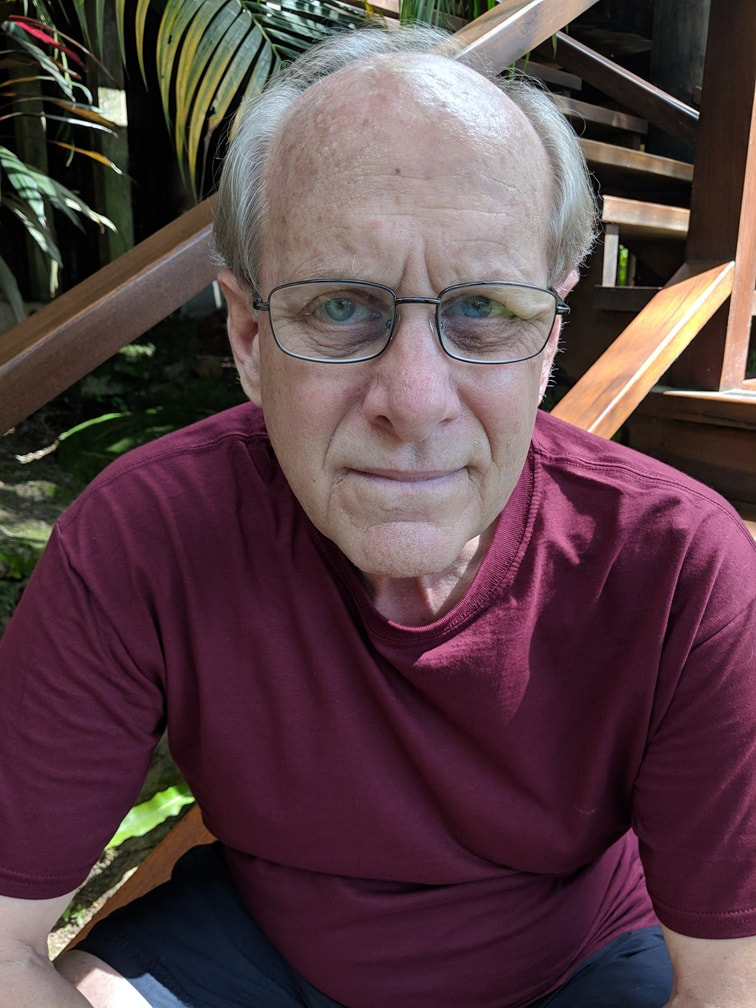
Journalist, book/music critic, and memoirist Thomas Larson is the author of Spirituality and the Writer: A Personal Inquiry (Swallow Press), The Sanctuary of Illness: A Memoir of Heart Disease (Hudson Whitman),The Saddest Music Ever Written: The Story of Samuel Barber’s ‘Adagio for Strings’ (Pegasus Press), and The Memoir and the Memoirist: Reading and Writing Personal Narrative (Swallow Press). He is a twenty-five-year staff writer of longform journalism for the San Diego Reader, an editor at Wandering Aengus Press, and a former faculty member in the Ashland (Ohio) University MFA Program. He works privately with authors of nonfiction manuscripts.


Related Works

Thomas Larson
What I Am Not Yet, I Am
Assay 3.2 (Spring 2017)

W. Scott Olsen
In Other Words
Assay 4.2 (Spring 2018)
Annie Penfield
 Moving Towards What is Alive:
The Power of the Sentence to Transform
​
Assay 4.2 (Spring 2018)


Return to 10.2
Return to conversations
Proudly powered by Weebly
  • 12.2 (Spring 2026)
    • 12.2 Editor's Note
    • 12.2 Articles >
      • Lynn Z. Bloom, "Mapping the Surprising Territory of Old Age: ​A Conversation with Memoirists" (Assay 12.2)
      • Heather Lanier, "The Science of Awe and the Essay" (Assay 12.2)
      • David Lazar, "Queering the Essay" (Assay 12.2)
      • Christine Light, "The Lyric Calls: Writing and Reading Trauma Paratactically ​in a Hypotactic World" (Assay 12.2)
      • Keene Short, "Erin Dorney and an Ontology of Ambivalence" (Assay 12.2)
    • 12.2 Conversations >
      • G. Douglas Atkins, “The Course of Interpretive Discovery”: An Essay on the Essay, an Essay on Criticism" (Assay 12.2)
      • William Gruber, "On Allusiveness" (Assay 12.2)
      • Jill Kolongowski, Brooke Champagne, Nicole Graev Lipson, Amy Monticello, and Beth Ann Fennelly, “Anger Had Snatched Her Pencil While She Dreamt”: ​Rage as a Craft Tool" (Assay 12.2)
      • Max Rubin, "Bernard Cooper and the Essayistic Sentence" (Assay 12.2)
      • Zoë Stark, "Beginnings and Endings in Brian Doyle’s “Joyas Voladoras”" (Assay 12.2)
    • 12.2 Pedagogy >
      • Jill Christman, "Writing the Tooth—Or, How to Find Big Ideas in Tiny Things" (Assay 12.2)
  • Archives
    • Journal Index >
      • Author Index
      • Subject Index
    • 1.1 (Fall 2014) >
      • Editor's Note
      • 1.1 Articles >
        • Sarah Heston, "Critical Memoir: A Recovery From Codes" (1.1)
        • Andy Harper, "The Joke's On Me: The Role of Self-Deprecating Humor in Personal Narrative" (1.1)
        • Ned Stuckey-French, "Our Queer Little Hybrid Thing" (1.1)
        • Brian Nerney, "John McCarten’s ‘Irish Sketches’: ​The New Yorker’s ‘Other Ireland’ in the Early Years of the Troubles, 1968-1974" (1.1)
        • Wendy Fontaine, "Where Memory Fails, Writing Prevails: Using Fallacies of Memory to Create Effective Memoir" (1.1)
        • Scott Russell Morris, "The Idle Hours of Charles Doss, or ​The Essay As Freedom and Leisure" (1.1)
      • 1.1 Conversations >
        • Donald Morrill, "An Industrious Enchantment" (1.1)
        • Sonya Huber, "Amazon Constellations" (1.1)
        • Derek Hinckley, "Fun Home: Change and Tradition in Graphic Memoir" (1.1)
        • Interview with Melanie Hoffert
        • Interview with Kelly Daniels
      • 1.1 Pedagogy >
        • Robert Brooke, "Teaching: 'Rhetoric: The Essay'" (1.1)
        • Richard Louth, "In Brief: Autobiography and Life Writing" (1.1)
    • 1.2 (Spring 2015) >
      • 1.2 Articles >
        • Kelly Harwood, "Then and Now: A Study of Time Control in ​Scott Russell Sanders' 'Under the Influence'" (1.2)
        • Diana Wilson, "Laces in the Corset: Structures of Poetry and Prose that Bind the Lyric Essay" (1.2)
        • Randy Fertel, "A Taste For Chaos: Creative Nonfiction as Improvisation" (1.2)
        • Lynn Z. Bloom, "Why the Worst Trips are the Best: The Comic Travails of Geoffrey Wolff & Jonathan Franzen" (1.2)
        • Ingrid Sagor, "What Lies Beside Gold" (1.2)
        • Catherine K. Buni, "Ego, Trip: On Self-Construction—and Destruction—in Creative Nonfiction" (1.2)
      • 1.2 Conversations >
        • Doug Carlson, "Paul Gruchow and Brian Turner: Two Memoirs Go Cubistic" (1.2)
        • Patrick Madden, "Aliased Essayists" (1.2)
        • Beth Slattery, "Hello to All That" (1.2)
        • Interview with Michael Martone (1.2)
      • Spotlight >
        • Richard Louth, "The New Orleans Writing Marathon and the Writing World" (1.2)
        • Kelly Lock-McMillen, "Journey to the Center of a Writer's Block" (1.2)
        • Jeff Grinvalds, "Bringing It Back Home: The NOWM in My Classroom" (1.2)
        • Susan Martens, "Finding My Nonfiction Pedagogy Muse at the NOWM" (1.2)
      • 1.2 Pedagogy >
        • Steven Church, "The Blue Guide Project: Fresno" (1.2)
        • Stephanie Vanderslice, "From Wordstar to the Blogosphere and Beyond: ​A Digital Literacy and Teaching Narrative (Epiphany Included)" (1.2)
        • Jessica McCaughey, "That Snow Simply Didn’t Fall: How (and Why) to Frame the Personal Essay as a Critical Inquiry into Memory in the First-Year Writing Classroom" (1.2)
    • 2.1 (Fall 2015) >
      • Editor's Note2.1
      • 2.1 Articles >
        • Daniel Nester, "Straddling the Working Class Memoir" (2.1)
        • Sarah M. Wells, "The Memoir Inside the Essay Collection: ​Jo Ann Beard's Boys of My Youth" (2.1)
        • Chris Harding Thornton, "Ted Kooser's "Hands": On Amobae, Empathy, and Poetic Prose" (2.1)
        • Steven Harvey & Ana Maria Spagna, "The Essay in Parts" (2.1)
        • Megan Culhane Galbraith, "Animals as Aperture: How Three Essayists Use Animals to Convey Meaning and Emotion" (2.1)
      • 2.1 Conversations >
        • Barrie Jean Borich, "Deep Portrait: On the Atmosphere of Nonfiction Character" (2.1)
        • Tim Bascom, "As I See It: Art and the Personal Essay" (2.1)
        • Adrian Koesters, "Because I Said So: Language Creation in Memoir" (2.1)
        • Interview with Simmons Buntin (2.1)
        • Mike Puican, "Narrative Disruption in Memoir" (2.1)
      • 2.1 Pedagogy >
        • Bernice M. Olivas, "Politics of Identity in the Essay Tradition" (2.1)
        • Ioanna Opidee, "Essaying Tragedy" (2.1)
        • Crystal N. Fodrey, "Teaching CNF Writing to College Students: A Snapshot of CNF Pedagogical Scholarship" (2.1)
        • W. Scott Olsen, "Teaching Adventure, Exploration and Risk" (2.1)
        • Christian Exoo & Sydney Fallon, "Using CNF to Teach the Realities of Sexual Assault to ​First Responders: An Annotated Bibliography" (2.1)
    • Special Conference Issue
    • 2.2 (Spring 2016) >
      • 2.2 Articles >
        • Micah McCrary, "A Legacy of Whiteness: Reading and Teaching Eula Biss’s Notes from No Man’s Land" (2.2)
        • Marco Wilkinson, "Self-Speaking World" (2.2)
        • Miles Harvey, "We Are All Travel Writers, We Are All Blind" (2.2)
        • Ashley Anderson, "Playing with the Essay: Cognitive Pattern Play in Ander Monson and Susan Sontag" (2.2)
        • Lawrence Evan Dotson, "Persona in Progression: ​A Look at Creative Nonfiction Literature in Civil Rights and Rap" (2.2)
      • 2.2 Conversations >
        • Julie Platt, "What Our Work is For: ​The Perils and Possibilities of Arts-Based Research" (2.2)
        • William Bradley, "On the Pleasure of Hazlitt" (2.2)
        • Jie Liu, "​'Thirteen Canada Geese': On the Video Essay" (2.2)
        • Stacy Murison, "​Memoir as Sympathy: Our Desire to be Understood" (2.2)
      • 2.2 Pedagogy >
        • Stephanie Guedet, "​Feeling Human Again: Toward a Pedagogy of Radical Empathy" (2.2)
        • DeMisty Bellinger-Delfield, "Exhibiting Speculation in Nonfiction: Teaching 'What He Took'" (2.2)
        • Gail Folkins, "Straight from the Source: ​Primary Research and the Personality Profile" (2.2)
    • 3.1 (Fall 2016) >
      • 3.1 Articles >
        • Chelsey Clammer, "Discovering the (W)hole Story: On Fragments, Narrative, and Identity in the Embodied Essay" (3.1)
        • Sarah Einstein, "'The Self-ish Genre': Questions of Authorial Selfhood and Ethics in ​First Person Creative Nonfiction" (3.1)
        • Elizabeth Paul, "​Seeing in Embraces" (3.1)
        • Jennifer M. Dean, "Sentiment, Not Sentimentality" (3.1)
      • 3.1 Conversations >
        • Interview with Robert Atwan (3.1)
        • Jody Keisner, "'Did I Miss a Key Point?': ​A Study of Repetition in Joan Didion’s Blue Nights" (3.1)
        • Julija Sukys, "In Praise of Slim Volumes: Big Book, Big Evil" (3.1)
        • Lynn Z. Bloom, "​The Great American Potluck Party" (3.1)
        • Jenny Spinner, "​The Best American Essays Series as (Partial) Essay History" (3.1)
      • 3.1 Pedagogy >
        • Heath Diehl, "​The Photo Essay: The Search for Meaning" (3.1)
        • Sonya Huber, "​James Baldwin: Nonfiction of a Native Son" (3.1)
        • Christian Exoo, "Using CNF to Teach the Realities of ​Intimate Partner Violence to First Responders: An Annotated Bibliography" (3.1)
        • John Proctor, "Teachin’ BAE: A New Reclamation of Research and Critical Thought" (3.1)
        • Richard Gilbert, "Classics Lite: On Teaching the Shorter, Magazine Versions of James Baldwin's 'Notes of a Native Son' and ​Jonathan Lethem's 'The Beards'" (3.1)
        • Dawn Duncan & Micaela Gerhardt, "The Power of Words to Build Bridges of Empathy" (3.1)
    • 3.2 (Spring 2017) >
      • 3.2 Articles >
        • Jennifer Lang, "When Worlds Collide: ​Writers Exploring Their Personal Narrative in Context" (3.2)
        • Creighton Nicholas Brown, "Educational Archipelago: Alternative Knowledges and the Production of Docile Bodies in Jamaica Kincaid’s A Small Place and Marjane Satrapi’s The Complete Persepolis" (3.2)
        • Nicola Waldron, "Containing the Chaos: On Spiral Structure and the Creation of Ironic Distance in Memoir" (3.2)
        • Charles Green, "Remaking Relations: ​Reading Ta-Nehisi Coates Beyond James Baldwin" (3.2)
        • Joey Franklin, "Facts into Truths: Henry David Thoreau and the Role of Hard Facts in ​Creative Nonfiction" (3.2)
      • 3.2 Conversations >
        • Thomas Larson, "What I Am Not Yet, I Am" (3.2)
        • Amanda Ake, "Vulnerability and the Page: Chloe Caldwell’s I’ll Tell You In Person"​ (3.2)
        • "Interview with Gail Griffin" (3.2)
        • Alysia Sawchyn, "On Best American Essays 1989" (3.2)
      • 3.2 Pedagogy >
        • D. Shane Combs, "Go Craft Yourself: Conflict, Meaning, and Immediacies Through ​J. Cole’s “Let Nas Down” (3.2)
        • Michael Ranellone, "Brothers, Keepers, Students: John Edgar Wideman Inside and Outside of Prison" (3.2)
        • Emma Howes & Christian Smith, ""You have to listen very hard”: Contemplative Reading, Lectio Divina, and ​Social Justice in the Classroom" (3.2)
        • Megan Brown, "The Beautiful Struggle: ​Teaching the Productivity of Failure in CNF Courses" (3.2)
    • 4.1 (Fall 2017) >
      • Editor's Note
      • 4.1 Articles >
        • Jennifer Case, "Place Studies: Theory and Practice in Environmental Nonfiction"
        • Bob Cowser, Jr., "Soldiers, Home: Genre & the American Postwar Story from Hemingway to O'Brien & then Wolff"
        • Sam Chiarelli, "Audience as Participant: The Role of Personal Perspective in Contemporary Nature Writing"
        • Kate Dusto, "Reconstructing Blank Spots and Smudges: How Postmodern Moves Imitate Memory in Mary Karr's The Liars' Club"
        • Joanna Eleftheriou, "Is Genre Ever New? Theorizing the Lyric Essay in its Historical Context"
        • Harriet Hustis, ""The Only Survival, The Only Meaning": ​The Structural Integrity of Thornton Wilder's Bridge in John Hersey's Hiroshima"
      • 4.1 Conversations >
        • Taylor Brorby, "​On 'Dawn and Mary'"
        • Steven Harvey, "​From 'Leap'"
        • J. Drew Lanham, "​On 'Joyas Voladoras'"
        • Patrick Madden, "On 'His Last Game'"
        • Ana Maria Spagna, "On 'How We Wrestle is Who We Are'"
      • 4.1 Pedagogy >
        • Jacqueline Doyle, "Shuffling the Cards: ​I Think Back Through Judith Ortiz Cofer"
        • Amy E. Robillard, "Children Die No Matter How Hard We Try: What the Personal Essay Teaches Us About Reading"
    • 4.2 (Spring 2018) >
      • 4.2 Articles >
        • Megan Brown, "Testimonies, Investigations, and Meditations: ​Telling Tales of Violence in Memoir"
        • Corinna Cook, "Documentation and Myth: On Daniel Janke's How People Got Fire"
        • Michael W. Cox, "Privileging the Sentence: David Foster Wallace’s Writing Process for “The View from Mrs. Thompson’s”
        • Sarah Pape, "“Artistically Seeing”: Visual Art & the Gestures of Creative Nonfiction"
        • Annie Penfield, "Moving Towards What is Alive: ​The Power of the Sentence to Transform"
        • Keri Stevenson, "Partnership, Not Dominion: ​Resistance to Decay in the Falconry Memoir"
      • 4.2 Conversations >
        • Interview with Jericho Parms (4.2)
        • "Containing the Hidden Lives of Ordinary Things: A Conversation with Seven Authors"
        • Amy Monticello, "The New Greek Chorus: Collective Characters in Creative Nonfiction"
        • Stacy Murison, "David Foster Wallace's 'Ticket to the Fair'"
        • Emery Ross, "Toward a Craft of Disclosure: Risk, Shame, & Confession in the Harrowing Essay"
      • 4.2 Pedagogy >
        • Sonya Huber, "Field Notes for a Vulnerable & Immersed Narrator" (4.2)
        • W. Scott Olsen, "In Other Words" (4.2)
    • 5.1 (Fall 2018) >
      • 5.1 Articles >
        • Emily W. Blacker, "Ending the Endless: The Art of Ending Personal Essays" (5.1)
        • Marya Hornbacher, ""The World is Not Vague": Nonfiction and the Urgency of Fact" (5.1)
        • Rachel May, "The Pen and the Needle: ​ Intersections of Text and Textile in and as Nonfiction" (5.1)
        • Jen Soriano, "Multiplicity from the Margins: The Expansive Truth of Intersectional Form" (5.1)
      • 5.1 Conversations >
        • Matthew Ferrence, "In Praise of In Praise of Shadows: Toward a Structure of Reverse Momentum" (5.1)
        • John Proctor, "Nothing Out of Something: Diagramming Sentences of Oppression" (5.1)
        • Alysia Sawchyn, "Essaying the World: ​On Tell Me How It Ends: An Essay in Forty Questions" (5.1)
        • Nicole Walker, "On Beauty" (5.1)
      • 5.1 Spotlight >
        • Philip Graham, "The Shadow Knows (5.1)
        • Miles Harvey, "The Two Inmates: ​Research in Creative Nonfiction and the Power of “Outer Feeling”" (5.1)
        • Tim Hillegonds, "Making Fresh" (5.1)
        • Michele Morano, "Creating Meaning Through Structure" (5.1)
      • 5.1 Pedagogy >
        • Meghan Buckley, "[Creative] Nonfiction Novella: Teaching Postcolonial Life Writing and the ​Hybrid Genre of Jamaica Kincaid’s A Small Place" (5.1)
        • Edvige Giunta, "Memoir as Cross-Cultural Practice in Italian American Studies" (5.1) >
          • Vivian Wagner, "Crafting Digression: Interactivity and Gamification in Creative Nonfiction" (5.1)
        • Jody Keisner, "Gender Identity in Personal Writing: Contextualizing the Syllabi" (5.1)
        • Terry Ann Thaxton, "Workshop Wild" (5.1)
        • Amanda Wray, "​Contesting Traditions: Oral History in Creative Writing Pedagogy" (5.1)
    • 5.2 (Spring 2019) >
      • 5.2 Articles >
        • Nina Boutsikaris, "On Very Short Books, Miniatures, and Other Becomings" (5.2)
        • Kay Sohini, "The Graphic Memoir as a Transitional Object: ​ Narrativizing the Self in Alison Bechdel’s Are You My Mother?" (5.2)
        • Kelly Weber, ""We are the Poem": Structural Fissures and Levels in ​Lidia Yuknavitch’s The Chronology of Water" (5.2)
      • 5.2 Conversations >
        • Sam Cha, "​Unbearable Splendor: Against "Hybrid" Genre; Against Genre" (5.2)
        • Rachel Cochran, "Infection in “The Hour of Freedom”: Containment and Contamination in Philip Kennicott’s “Smuggler”" (5.2)
        • Katharine Coles, "​If a Body" (5.2)
        • A.M. Larks, "Still Playing the Girl" (5.2)
      • 5.2 Spotlight >
        • Charles Green, "In Praise of Navel Gazing: An Ars Umbilica" (5.2)
        • Sarah Kruse, "​The Essay: Landscape, Failure, and Ordinary’s Other" (5.2)
        • Desirae Matherly, "Something More Than This" (5.2)
        • Susan Olding, "Unruly Pupil" (5.2)
        • Jane Silcott, "Essaying Vanity" (5.2)
      • 5.2 Tribute to Louise DeSalvo >
        • Julija Sukys, "One Mother to Another: Remembering Louise DeSalvo (1942—2018)" (5.2)
        • Nancy Caronia and Edvige Giunta, "The Essential Louise DeSalvo Reading List" (5.2)
        • Nancy Caronia and Edvige Giunta, "From the Personal Edge: Beginning to Remember Louise DeSalvo" (5.2)
        • Richard Hoffman, "DeSalvo Tribute, IAM Books, Boston" (5.2)
        • Peter Covino, "Getting It Right – Homage for Louise DeSalvo" (5.2)
        • Mary Jo Bona, "Pedagogy of the Liberated and Louise DeSalvo’s Gifts" (5.2)
        • Joshua Fausty, "The Shared Richness of Life Itself" (5.2)
      • 5.2 Pedagogy >
        • Ashley Anderson, "Teaching Experimental Structures through Objects and ​John McPhee’s 'The Search for Marvin Gardens'" (5.2)
        • Trisha Brady, "Negotiating Linguistic Borderlands, Valuing Linguistic Diversity, and Incorporating Border Pedagogy in a College Composition Classroom" (5.2)
        • Kim Hensley Owens, "Writing Health and Disability: Two Problem-Based Composition Assignments" (5.2)
        • Reshmi Mukherjee, "Threads: From the Refugee Crisis: Creative Nonfiction and Critical Pedagogy" (5.2)
        • Susan M. Stabile, "Architectures of Revision" (5.2)
    • 6.1 (Fall 2019) >
      • 6.1 Articles >
        • Lynn Z. Bloom, "The Slippery Slope: ​Ideals and Ethical Issues in High Altitude Climbing Narratives" (6.1)
        • Tanya Bomsta, "The Performance of Epistemic Agency of the ​Autobiographical Subject in Terry Tempest Williams’s When Women Were Birds: Fifty-four Variations on Voice" (6.1)
        • Lorna Hummel, "Querying and Queering Caregiving: Reading Bodies Othered by Illness via Porochista Khakpour’s Sick: A Memoir" (6.1)
        • Laura Valeri, "Tell Tale Interviews: Lessons in True-Life Trauma Narratives Gleaned from ​Jennifer Fox’s The Tale" (6.1)
        • Arianne Zwartjes​, "Under the Skin: An Exploration of Autotheory" (6.1)
      • 6.1 Conversations >
        • Tracy Floreani, "​"Sewing and Telling": On Textile as Story" (6.1)
        • Tessa Fontaine, "The Limits of Perception: Trust Techniques in Nonfiction" (6.1)
        • Patrick Madden, "​Once More to 'His Last Game'" (6.1) >
          • Brian Doyle, "Twice More to the Lake" (6.1)
        • Randon Billings Noble, "The Sitting" (6.1)
        • Donna Steiner, "Serving Size: On Hunger and Delight" (6.1)
        • Natalie Villacorta, "Autofiction: Rightly Shaped for Woman’s Use" (6.1)
      • 6.1 Tribute to Ned Stuckey-French >
        • Marcia Aldrich, "The Book Reviewer" (6.1)
        • Bob Cowser, "Meeting Bobby Kennedy" (6.1)
        • Sonya Huber, "Working and Trying" (6.1)
        • Carl H. Klaus, "On Ned Stuckey-French and Essayists on the Essay" (6.1)
        • Robert Root, "On The American Essay in the American Century" (6.1)
      • 6.1 Pedagogy >
        • John Currie, "​The Naïve Narrator in Student-Authored Environmental Writing" (6.1)
        • Steven Harvey, "The Humble Essayist's Paragraph of the Week: A Discipline of the Heart and Mind" (6.1)
        • Reagan Nail Henderson, "Make Me Care!: Creating Digital Narratives in the Composition Classroom" (6.1)
        • Abriana Jetté, "Making Meaning: Authority, Authorship, and the Introduction to Creative Writing Syllabus" (6.1)
        • Jessie Male, "Teaching Lucy Grealy’s “Mirrorings” and the Importance of Disability Studies Pedagogy in Composition Classrooms" (6.1)
        • Wendy Ryden, "Liminally True: Creative Nonfiction as Transformative Thirdspace" (6.1)
    • 6.2 (Spring 2020) >
      • Guest Editor's Note to the Special Issue
      • 6.2 Articles >
        • Maral Aktokmakyan, "Revisioning Gendered Reality in ​Armenian Women’s Life Writing of the Post-Genocidal Era: Zaruhi Kalemkearian’s From the Path of My Life"
        • Manisha Basu, "Regimes of Reality: ​Of Contemporary Indian Nonfiction and its Free Men"
        • Stefanie El Madawi, "Telling Tales: Bearing Witness in Jennifer Fox’s The Tale"
        • Inna Sukhenko and Anastasia Ulanowicz, "Narrative, Nonfiction, and the Nuclear Other: Western Representations of Chernobyl in the Works of Adam Higginbotham, Serhii Plokhy, and Kate Brown"
      • 6.2 Conversations >
        • Leonora Anyango-Kivuva, "Daughter(s) of Rubanga: An Author, a Student, and Other Stories in Between"
        • Victoria Brown, "How We Write When We Write About Life: Caribbean Nonfiction Resisting the Voyeur"
        • David Griffith, "Wrecking the Disimagination Machine"
        • Stacey Waite, "Coming Out With the Truth"
      • Tribute to Michael Steinberg >
        • Jessica Handler, "Notes on Mike Steinberg"
        • Joe Mackall, "Remembering Mike Steinberg: On the Diamond and at the Desk"
        • Laura Julier, "Making Space"
      • 6.2 Pedagogy >
        • Jens Lloyd, "Truthful Inadequacies: Teaching the Rhetorical Spark of Bashō’s Travel Sketches"
        • George H. Jensen, "Situating Scenes: Cheryl Strayed’s “The Love of My Life”
        • Gregory Stephens, "Footnotes from the ‘Margins’: Outcomes-based Literary Nonfiction Pedagogy in Puerto Rico"
    • 7.1 (Fall 2020) >
      • 7.1 Articles >
        • Jo-Anne Berelowitz, "Mourning and Melancholia in Memoir" (Assay 7.1)
        • Carlos Cunha, "On the Chronicle" (Assay 7.1)
        • August Owens Grimm, "Haunted Memoir" (Assay 7.1)
        • Colleen Hennessy, "Irish Motherhood in Irish Nonfiction: Abortion and Agency" (Assay 7.1)
        • James Perrin Warren, "Underland: Reading with Robert Macfarlane" (Assay 7.1)
      • 7.1 Conversations >
        • Alex Brostoff, ""What are we going to do with our proximity, baby!?" ​ A Reply in Multiples of The Hundreds" (Assay 7.1)
        • Steven Harvey, "Lyric Memory: A Guide to the Mnemonics of Nonfiction" (Assay 7.1)
        • Lisa Low, "Proleptic Strategies in Race-Based Essays: Jordan K. Thomas, Rita Banerjee, and Durga Chew-Bose" (Assay 7.1)
        • Nicole Walker, "The Concrete Poetry of Ander Monson’s Essays" (Assay 7.1)
      • 7.1 Pedagogy >
        • Audrey T. Heffers, "Positionality and Experience in the Creative Nonfiction Classroom" (Assay 7.1)
        • James McAdams, "Ars Poetica, Ars Media, Ars COVID-19: Creative Writing in the Medical Classroom" (Assay 7.1)
        • Freesia McKee, "Feedback as Fan Letter" (Assay 7.1)
        • Tonee Mae Moll, "Teaching and Writing True Stories Through ​Feminist, Womanist and Black Feminist Epistemologies" (Assay 7.1)
        • Jill Stukenberg, "“Inspiration in the Drop of Ink”: Scholarship of Teaching and Learning Observations in Introduction to Creative Writing" (Assay 7.1)
    • 7.2 (Spring 2021) >
      • 7.2 Articles >
        • Whitney Brown, "Melting Ice and Disappointing Whale Hunts: A Climate-Focused Review of Contemporary Travel Writing" (Assay 7.2)
        • George Estreich, "Ross Gay’s Logics of Delight" (Assay 7.2)
        • Wes Jamison, "'You Are Absent': The Pronoun of Address in Nonfiction" (Assay 7.2)
        • Zachary Ostraff, "The Lyric Essay as a Form of Counterpoetics" (Assay 7.2)
        • Kara Zivin, "Interrogating Patterns: Meandering, Spiraling, and Exploding through ​The Two Kinds of Decay" (Assay 7.2)
      • 7.2 Conversations >
        • Sarah Minor
        • David Shields
      • 7.2 Pedagogy >
        • Megan Baxter, "On Teaching Brian Doyle’s “Leap” to Students Born After 9/11" (Assay 7.2)
        • Jennifer Case, "'Toward a New, Broader Perspective': Place-Based Pedagogy and the Narrative Interview"
        • Kelly K. Ferguson, "Cribbing Palpatine’s Syllabus: Or, What Professoring for the Evil Empire Taught Me ​About Instructional Design" (Assay 7.2)
        • Jennifer Pullen, "Seeking Joy in the Classroom: Nature Writing in 2020" (Assay 7.2)
    • 8.1 (Fall 2021) >
      • 8.1 Articles >
        • Allison Ellis, "Nonfiction Ghost Hunting" (Assay 8.1)
        • Lisa Levy, "We Are All Modern: Exploring the Vagaries of Consciousness in 20th & 21st Century Biography and Life Writing" (Assay 8.1)
        • Ashley Espinoza, "A las Mujeres: Hybrid Identities in Latina Memoir" (Assay 8.1)
        • Cherie Nelson, "The Slippery Self: Intertextuality in Lauren Slater’s Lying" (Assay 8.1)
        • Amie Souza Reilly, "Reading the Gaps: On Women’s Nonfiction and Page Space" (Assay 8.1)
      • 8.1 Conversations >
        • Amy Bowers, "The Elegiac Chalkboard in Jo Ann Beard’s “The Fourth State of Matter”" (Assay 8.1)
        • Theresa Goenner, "​The Mania of Language: Robert Vivian's Dervish Essay" (Assay 8.1)
        • Kathryn Nuernberger, "Writing Women’s Histories" (Assay 8.1)
        • Louisa McCullough, "The Case for In-Person Conversation" (Assay 8.1)
        • Kat Moore, "Rupture in Time (and Language): Hybridity in Kathy Acker’s Essays" (Assay 8.1)
      • 8.1 Pedagogy >
        • Mike Catron, "There’s No Such Thing as Too Much of Jason Sheehan’s “There’s No Such Thing As Too Much Barbecue”: ​A Pedagogical Discussion" (Assay 8.1)
        • Brooke Covington, "Ars Media: A Toolkit for Narrative Medicine in Writing Classrooms" (Assay 8.1)
        • W. Scott Olsen, "​A Desire for Stories" (Assay 8.1)
        • C.S. Weisenthal, "​Seed Stories: Pitched into the Digital Archive" (Assay 8.1)
    • 8.2 (Spring 2022) >
      • 8.2 Articles >
        • Barrie Jean Borich, "Radical Surprise: The Subversive Art of the Uncertain," (8.2)
        • George Estreich, "Feeling Seen: Blind Man’s Bluff, Memoir, and the Sighted Reader" (8.2)
        • Kristina Gaddy, "When Action is Too Much and Not Enough: A Study of Mode in Narrative Journalism" (8.2)
        • Marya Hornbacher, "Solitude Narratives: Towards a Future of the Form" (8.2)
        • Margot Kotler, "Susan Sontag, Lorraine Hansberry, and the ​Politics of Queer Biography " (8.2)
      • 8.2 Conversations >
        • Michael W. Cox , "On Two Published Versions of Joan Didion’s “Marrying Absurd” (8.2)
        • Hugh Martin, "No Cheap Realizations: On Kathryn Rhett’s “Confinements” (8.2)
      • 8.2 Pedagogy >
        • Liesel Hamilton, "How I Wish I’d Taught Frederick Douglass: An Examination of the Books and Conversations We Have in Classrooms" (8.2)
        • Audrey T. Heffers, "In the Room Where it Happens: Accessibility, Equity, and the Creative Writing Classroom" (8.2)
        • Daniel Nester, "Joan Didion and Aldous Huxley’s Three Poles" (8.2)
    • 9.1 (Fall 2022) >
      • 9.1 Articles >
        • Mark Houston, "Riding Out of Abstraction: Robin Wall Kimmerer’s Re-materialization of ​Social Justice Rhetoric in “The Sacred and the Superfund”" (9.1)
        • Ryan McIlvain, ""You Get to Decide What to Worship but Not What's Good": Rereading 'This Is Water'" (9.1)
        • Quincy Gray McMichael, "Laboring toward Leisure: The Characterization of Work in ​Maine’s Back-to-the-Land Memoirs" (9.1)
        • Aggie Stewart, "Bringing Dark Events to Light: ​Emotional Pacing in the Trauma Narrative" (9.1)
        • Emma Winsor Wood, "A Lovely Woman Tapers Off into a Fish: Monstrosity in Montaigne’s Essais" (9.1)
      • 9.1 Conversations >
        • Philip Newman Lawton, "Rousseau's Wandering Mind" (9.1)
        • Claire Salinda, "Bodily Dissociation as a Female Coping Mechanism in ​The Shapeless Unease, Ongoingness: The End of a Diary, and Girlhood" (9.1)
        • Hannah White, "“Which sounds bad and maybe was”: A Study of Narrative in Beth Nguyen’s “Apparent”" (9.1)
      • 9.1 Pedagogy >
        • Jessica Handler, "Your Turn" (9.1)
        • Sonya Huber, "Expressing Anger as a Positive Choice" (9.1)
        • Kozbi Simmons, "Literacy as Emancipation" (9.1)
        • Wally Suphap, "Writing and Teaching the Polemic" (9.1)
    • 9.2 (Spring 2023) >
      • 9.2 Articles >
        • Brinson Leigh Kresge, "Repetition Development in the Lyric Essay" (Assay 9.2)
        • Amy Mackin, "A Structural History of American Public Health Narratives: Rereading Priscilla Wald’s Contagious and Nancy Tomes’ Gospel of Germs amidst a 21st-Century Pandemic" (Assay 9.2)
        • Jeannine Ouellette, "That Little Voice: The Outsized Power of a Child Narrator" (Assay 9.2)
        • Jennifer Lee Tsai, "The Figure of the Diseuse in Theresa Hak Kyung Cha's Dictee: Language, Breaking Silences and Irigarayan Mysticism" (Assay 9.2)
      • 9.2 Conversations >
        • Blossom D'Souza, "The Imagery of Nature in Rilke’s Letters to a Young Poet" (Assay 9.2)
        • Kyra Lisse, "Relentlist Women: On the Lists & Catalogs of Natalia Ginzburg & Annie Ernaux" (Assay 9.2)
        • William Kerwin,​ “Life as a Boneyard”: Art, History, and Ecology in One Tim Robinson Essay" (Assay 9.2)
        • Jill Kolongowski & Amy Monticello, "The Mundane as Maximalism of the Mind: Reclaiming the Quotidian" (Assay 9.2)
        • Eamonn Wall, "A Land Without Shortcuts: Tim Robinson and Máiréad Robinson" (Assay 9.2)
      • 9.2 Pedagogy >
        • Khem Aryal, "Beyond Lores: Linking Writers’ Self-Reports to Autoethnography" (Assay 9.2)
        • Jennifer Case, "Carework in the Creative Nonfiction Classroom: ​Toward a Trauma-Informed Pedagogy" (Assay 9.2)
        • Liesel Hamilton, "Creating Nonfiction Within and Against ​Nature and Climate Tropes" (Assay 9.2)
        • W. Scott Olsen, "Late Night Thoughts on What Street Photography ​Can Teach Us About Teaching Writing" (Assay 9.2)
    • 10.1 (Fall 2023) >
      • 10.1 Articles >
        • Ashley Anderson, "Give Them Space: ​Memoir as a Site for Processing Readers’ Grief" (Assay 10.1)
        • Anne Garwig, "Hervey Allen’s Toward the Flame, Illustration, and the ​Legacy of Collective Memory of the First World War" (Assay 10.1)
        • Marya Hornbacher, "All We Do Not Say: The Art of Leaving Out" (Assay 10.1)
        • Kathryn Jones, "Conveying the Grief Experience: Joan Didion’s Use of Lists in The Year of Magical Thinking and Blue Nights" (Assay 10.1)
        • Erin Fogarty Owen, "How to Write Well About Death" (Assay 10.1)
      • 10.1 Conversations >
        • Beth Kephart, "On Reading Fast and Reading Slow" (Assay 10.1)
        • Mimi Schwartz, "The Power of Other Voices in Creative Nonfiction" (Assay 10.1)
      • 10.1 Pedagogy >
        • Angie Chuang, "Dear(ly) Departed: ​Letter-Writing to Engage the Issue of Racialized Police Brutality" (Assay 10.1)
        • Freesia McKee, "Where and How We Might Teach Hybrid: A Pedagogical Review of Kazim Ali’s Silver Road" (Assay 10.1)
    • 10.2 (Spring 2024) >
      • 10.2 Articles >
        • Lynn Z. Bloom, "Vanishing Points: Memoirs of Loss and Renewal "(Assay 10.2)
        • Lindsey Pharr, "Brave Person Drag": ​Identity, Consciousness, and the Power of the Cyclical in Gamebook-Formatted Memoir" (Assay 10.2)
      • 10.2 Conversations >
        • Marcia Aldrich, "On Difficulty" (Assay 10.2)
        • Thomas Larson, "Paraphrase, or Writer with Child" (Assay 10.2)
      • 10.2 Pedagogy >
        • Amy Bonnaffons, "Writing from the Big Brain: ​An Argument for Image and Process in Creative Writing Education" (Assay 10.2)
        • Micah McCrary, "Normalizing Creative Writing Scholarship in the Classroom" (Assay 10.2)
        • Candace Walsh, "The Braided Essay as Change Agent" (Assay 10.2)
    • 11.1 (Fall 2024) >
      • 11.1 Articles >
        • Anna Nguyen, "A Question on Genre: The Binary of the Creative/Theoretical Text in Elif Batuman’s The Possessed" (Assay 11.1)
        • Rachel N. Spear, "Saving Self and Others in Telling: Rhetoric, Stories, and Transformations" (Assay 11.1)
      • 11.1 Conversations >
        • Jehanne Dubrow, "The Essay's Volta" (Assay 11.1)
        • James Allen Hall, "Wholly Fragmented" (Assay 11.1)
      • 11.1 Spotlight >
        • Kim Hensley Owens & Yongzhi Miao, "Six Words is Enough: Memoirs for Assessment" (Assay 11.1)
        • Elizabeth Leahy, "Creating Space for Writing Tutor Vulnerability: Six-Word Memoirs in the Writing Center" (Assay 11.1)
        • Jennifer Stewart, "Six-Word Memoirs as Programmatic and Pedagogical Reflection" (Assay 11.1)
        • Katherine Fredlund, "Six Words Toward Knowing and Feeling" (Assay 11.1)
      • 11.1 Pedagogy >
        • Abby Manzella, "In Search of Delight (à la Ross Gay) at the Art Museum: ​A Writing Exercise with Pen in Hand" (Assay 11.1)
        • Peter Wayne Moe, "Grocery Shopping with Leonardo DiCaprio: On Time, Routines, & Writing" (Assay 11.1)
        • Gwen Niekamp, "The Case for Situating Olaudah Equiano’s Interesting Narrative ​in the CNF Classroom and Canon" (Assay 11.1)
    • 11.2 (Spring 2025) >
      • 11.2 Articles >
        • Megan Brown, “Quit Lit” as Neoliberal Narrative: The Nonfiction of Burnout, Self-Actualization, and the Great Resignation" (Assay 11.2)
        • Amy Cook, "Where There’s Smoke, There’s Blue Sky: The Hallmarks of 9/11’s Imagery in Prose" (Assay 11.2)
      • 11.2 Conversations >
        • Thomas Larson, "The Reader's Mental Ear" (Assay 11.2)
        • Patrick Madden, "An Open Letter to My Late Friend Brian Doyle" (Assay 11.2)
        • Rhonda Waterhouse, "Woven Craft: The Artistic Tools of Toni Jensen’s “Carry” (Assay 11.2)
      • 11.2 Pedagogy >
        • Becky Blake and Matthew J. Butler, "Avoiding Empathy Fatigue: What CNF Educators Can Learn from an Oncologist" (Assay 11.2)
        • Kelly Myers and Bruce Ballenger, "Essayism in the Age of AI" (Assay 11.2)
        • Marco Wilkinson, "Exquisite Copse" (Assay 11.2)
    • 12.1 (Fall 2025) >
      • 12.1 Editor's Note
      • 12.1 Articles >
        • Amy Bonnaffons, "Bodies of Text: On the Lyric Essay" (Assay 12.1)
        • Megan Connolly, "A Team in the Face of the World: Dogs as Narrative Agents in Memoirs about Life after Loss" (Assay 12.1)
        • Jeff Porter, "The History and Poetics of the Essay" (Assay 12.1)
      • 12.1 Conversations >
        • Desirae Matherly, "In Defense of Navel Gazing" (Assay 12.1)
        • Kathryn Nuernberger, "Research as Ritual" (Assay 12.1)
      • 12.1 Pedagogy >
        • Amy Garrett Brown, "Teaching the Researched Family Profile Essay as ​Meaningful Culturally Sustaining Pedagogy and Counterstory" (Assay 12.1)
        • Jessica Handler, "On Teaching Adrienne Rich" (Assay 12.1)
  • The Assay Interview Project
  • Pedagogy Resources
    • Assay's Syllabi Bank
    • The Assay Curriculum
    • Tried & True Podcast
  • About
    • About
    • Masthead
    • Submit
    • Contact
  • Substack